Saturday, November 7, 2015

Fantasy Book List


Fantasy Books on Friendship


I chose the theme friendship because I have observed how important it is for students to be accepted by their peers and to be surrounded by their friends. The books that I have chosen were some of my favorite books to read growing up!  

Bridge to Terabithia by Katherine Paterson


            One of the main themes in Bridge To Terabithia is friendship. This theme is shown throughout the book between the characters Jess and Leslie. In the beginning of the book, Jess and Leslie’s friendship is foreshadowed when Leslie beats Jess in a race. Jess had dreams of being the fastest runner and when Leslie beat him he was crushed and did not like Leslie. However, this all changes when they end up spending time together because they both are the outcasts in the fifth grade. Jess and Leslie become best friends as they discover a forest by swinging on a rope to cross a creak that they call Terabithia. This is where they escape reality and all of their hopes and dreams come true. Terabithia symbolizes their friendship. One day, Leslie went to Terabithia without Jess and she died while attempting to cross the creak. This was the turning point when Jess realizes what a special friendship they truly had. He realizes what he has lost and gained by having Leslie as a friend. Leslie’s friendship showed Jess that he should believe in himself and that he could accomplish great things. By following this advice that Leslie taught him through their friendship, he built a bridge to Terabithia and realized that he was worth believing in. Jess continues to visit Terabithia, which symbolized that he valued their friendship.

“For the first time in his life he got up every morning with something to look forward to. Leslie was more than his friend. She was his other, more exciting self- his way to Terabithia and all the worlds beyond.” - Jess


“To be able to be Leslie’s one whole friend in the world as she was his- he couldn’t help being satisfied about that.” - Jess


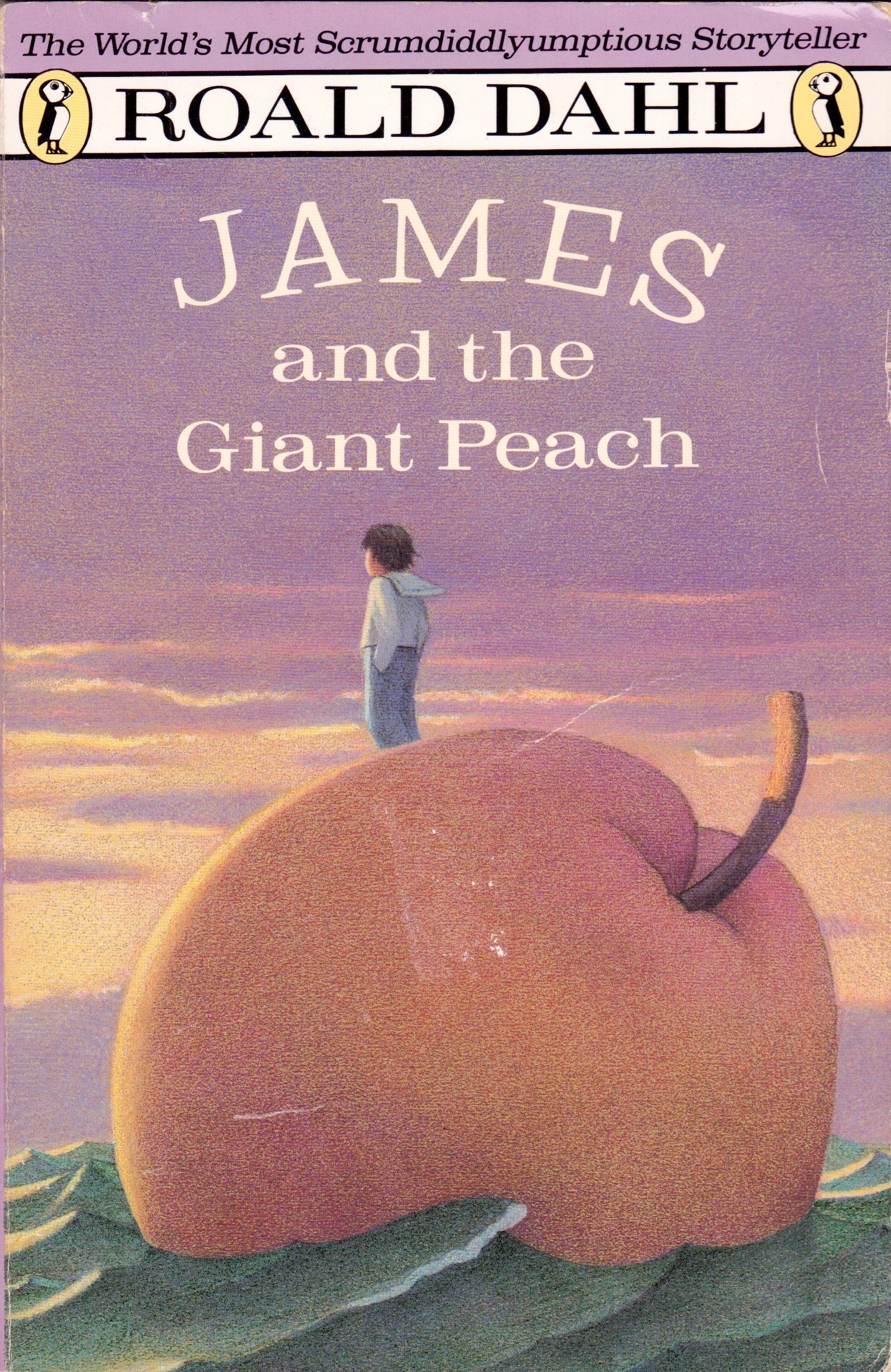
James and the Giant Peach by Roald Dahl


            The author Roald Dahl portrays the theme of friendship in this book through the lonely character James. James was a young boy that was sent to live with his two cruel aunts when his parents died. He craves companionship and wishes that he could go to the seaside and meet children his own age. Dahl makes the reader feel sorry for James until a magical peach grows in his backyard and he crawls inside. James is greeted by giant insects, which become his close friends by the end of the story. Through the use of personificiation, Dahl gives Miss Spider, Centipede, Old- Green- Grasshopper, Ladybug, Earthworm, Silkworm, and the Glow-Worm human characteristics that allowed James to build friendships based on trust and teamwork. These characters shared challenges that they were able to overcome on their journey through their friendships. At the end of the story, Old- Green- Grasshopper and Ladybug find new careers but still went to visit James in his Central Park home. This proves that they valued their friendship even after their journey had ended.

“James decided that he rather like the Centipede. He was obviously a rascal, but what a change it was to hear somebody laughing once in a while. He had never heard Aunt Sponge or Aunt Spiker laughing aloud in all the time he had been with them.”

“And James Henry Trotter, who once, if you remember, had been the saddest and loneliest boy that you could find, now had all the friends and playmates in the world.”


Winnie the Pooh by A. A. Milne


            The complete tales of Winnie- The- Pooh explores the idea of an “ideal” friendship for children. Through imaginary friends, Winnie- The- Pooh portrays friendship as spending time together. In each book, the characters face a problem that they solve together as friends.


“It seems they had always been, and would always be friends. Time could change much, but not that.”


Sunday, September 27, 2015

Reading Interest Survey


Reading Interest Survey

            I am currently teaching first grade and work with students that range on many different reading levels. Students in first grade are beginning readers. According to chapter two, “Books for beginning readers should connect to children’s interests, experiences, and reading abilities to support them in their initial reading experiences” (Lynch Brown et al., 2014, p. 17). My district requires us to use the Scholastic Reading Program during guided reading. This gives the students a reading interest survey to fill out before they begin reading in my classroom. It allows me to learn about my students’ interests.
            In the beginning of the school year, I like to quickly survey my class by having students who like to read stand on one side of the room, and students that do not like to read stand on the other side of the room. It is surprising to me that students who do not even know how to read yet already have a predetermined idea that they don’t like to read. This year, I have a lot of students who like to read and only a handful that do not. I noticed that many of the students who do not like to read are boys.
            For this assignment, I chose to work with my student Johnny.* Johnny filled out the survey from blackboard, “My Feelings About Reading.” Based on his answers, he does not like to read, he does not read at home, he doesn’t think that reading is fun, reading is hard for him, he does not like to read long stories, and he thinks that reading is boring. On a positive note, Johnny likes picture books, he likes someone to read to him, and he has enjoyed the books we read in school. I have also gathered additional information from the reading interest survey from Scholastic. Based on this survey, Johnny likes to read about bugs, reptiles, football, famous people, transportation, and volcanoes. I know that Johnny plays football for the recreation center and loves the New York Giants. He gets excited about football and is very interested to learn more about it.
            The books that I have chosen for Johnny are mostly read alouds because he tested on a level A, which means that he is a struggling reader. Johnny also expressed that he likes someone to read to him. Considering that Johnny does not read at home, I have added a book that his parents can read to him before he goes to sleep.  I have also found a book that Johnny will be able to independently read because it is a repetitive and predictable book with familiar words that is on his reading level. Chapter two states, “easy-to-read books and predictable books make use of familiar words, word and sentence patterns, illustration clues, and rhyme to make the text easier to read” (Lynch Brown et al., 2014, p. 17). If Johnny reads books that are on his reading level, he won’t think that reading is too hard for him.
            Here are some books that I recommend for Johnny to read based on the reading interest surveys he has completed:    


Arnold, T. (2008). Hooray for fly guy! New York: Scholastic. 


Barton, B. (2001). My car. New York: Greenwillow Books.


Cronin, D., & Bliss, H. (2003). Diary of a worm. New York: Joanna Cotler Books.


Dahl, M., & Forshay, C. (2004). Goodnight football: Capstone Young Readers.


Manning, P., & Manning, E. (2009). Family huddle. New York: Scholastic Press.
Orloff, K., & Catrow, D. (2004). I wanna iguana. New York: Putnam.


Schreiber, A. (2008). Volcanoes! Washington, D.C.: National Geographic.


Lynch-Brown, C., Short, K., & Tomlinson, C. (2014). Essentials of children's literature. Upper      
     Saddle River, NJ: Pearson Education. 

Sunday, September 13, 2015

Chapter 1

Chapter 1 
Learning about Story and Literature 

The word “literature” best reflects the meaning of chapter 1.


            Chapter 1 is about the value of literature.  Literature teaches what it means to be human. It allows the reader to experience life, and to think in new ways about their own life experiences, understandings, and emotions. Literature allows the reader to relate on a more personal level with the events and characters in the story. Many times, Elementary schools focus on how to “use” children’s books to teach something else and forget the value of literature. Lynch – Brown, Short & Tomlinson (2014) state, “we are often so focused on using literature for other purposes that we lose sight of literature as having value in and of itself for children’s lives as well as serving the purpose of enhancing their academic learning” (p.6).  It is important to remember that both aspects of literature are important.
            As a first grade teacher, I try to find books that I know my students can relate to. For example, on the first day of school I read the book “First Day Jitters” because I know they can all relate to feeling nervous and having to meet new friends and entering a new school. After reading the book, my students realize that they are not the only student in the class that feels that way. It helps them understand their own emotions and experiences through the characters in the story. 


"Quality in writing and illustration"
            Books that are “high-quality” offer readers enjoyment and stay in our memories. These books have the ability to stay interesting and remain meaningful for many years because of the imaginative use of language, images, and the artistic style. These books have valuable insights on what it means to be human and are engaging. On the other hand, books that are focused on the child as a consumer represent books that are low quality because they are used as advertisements. However, I have noticed that these are the books that my students are most interested in. I don’t want my students to read “low quality” books but I do want them to read books that they enjoy! I think these "low quality" books can be a starting point for some students to help them realize that reading is enjoyable and also help them realize what they like to read about. 


Lynch- Brown, Short & Tomlinson (2014) state, “this report also noted that the greatest gains in vocabulary, fluency, and comprehension came from independent reading by children” (p.8). I found this to be interesting because there is not enough independent reading time in school.  We are focused more on reading aloud and teaching students strategies as they read, than allowing the students to independently read. My daily schedule does not include scheduled independent reading time. I assign independent reading as homework, but if I do not model it in school then how can I expect my students to do it for homework? It is also hard to hold students accountable for independent reading. This year, I plan on “sneaking in” independent reading time as part of my morning routine because I want to improve my students’ vocabulary, fluency, and comprehension. I also want them to love to read as much as I do!


Lynch-Brown, C., Short, K., & Tomlinson, C. (2014). Essentials of children's literature. Upper   
     Saddle River, NJ: Pearson Education.

Saturday, July 25, 2015

Chapter 9- It says, I say, So..


Camille Sogluizzo
Chapter 9- Family Involvement
7/25/15

Question 1: How much involvement should be expected from families today?

It says: “American educators are expecting more family involvement with their children’s schooling today than they did only a few years ago” (Allington & Cunningham, p. 222). 

I say: Families differ in the amount of support they can provide based on the resources they have. Some families can afford to give their children extra support from tutors or special programs whereas others can’t provide the support their children may need. Some parents might have not completed school and have never learned how to write a research report or complete a math problem. They do not have the resources to help support their children succeed so they rely on the school. We can’t expect the same involvement from these families when they do not have the same resources.

So: Schools can’t improve family involvement until they define exactly what they want families to be involved in. They need to decide if they want families to be supportive and caring about their child’s well- being and their education. Do they want families to actively participate by attending school functions and talking to the teachers? If so, the families must have free time from work, child care for other children, transportation to the school, clothing they feel comfortable wearing to school, and money to pay for all of the above. If the families do not have these resources than this type of involvement will not be successful. So, schools need to supply the resources and expect involvement from their families that they can achieve. 

  
Question 2: How can we increase family efforts to support their children?

It says: “When classroom teachers reach out and communicate regularly with families, especially about positive aspects of children’s school experiences, families respond positively and increase their efforts to support their children” (Allington & Cunningham, p. 234).

I say: The most important communication is between the teacher and the family. The most effective form of communication is school- home communication. Families should understand what is going on in the classroom and be provided with the activities, curriculum, and plans. It is also important to inform families about the children’s progress, accomplishments, improvements, and ways to help them at home. By doing this, parents are involved and they begin to hold higher expectations from their children. Children will begin to get better grades because teachers are able to meet the needs of all children and gain more strategies for motivating children in their schoolwork. 

So: It is important for classroom teachers to communicate regularly with families and tell them positive things. This way, families will respond positively about school and want to support their children. Effective school-home communications include classroom newspapers, personal notes, phone calls, review activities, and work folders that children regularly take home. We can increase family efforts to support their children by communicating with families on a regular basis and being positive.


Question 3: Should schoolwork only be done in school?

It says: “Many working-class families saw schoolwork as fitting only into the school day. Work not done in school today could be done there tomorrow” (Allington & Cunningham, p. 222).

I say: There are two sides to homework. First, homework is important to complete at home. However, it should be something that was taught in class and assigned on the student’s independent level. Homework should be differentiated and reinforce the concept taught during the school day. Teachers should not assign homework that takes a long time to complete or that is considered busy work. On the other hand, there is no evidence that homework has any positive effect on student achievement. When did it become the family’s responsibility to supervise daily worksheet completion that was sent home for homework? 

So: Today, homework is common for elementary students. If homework is going to be assigned, it needs to be on the student’s independent level so that it does not become a burden for the family. It is important to keep in mind the resources that students may or may not have at home. So, there needs to be a balance when assigning homework. 

Saturday, July 11, 2015

Chapter 6 Article

Time is ticking
Time lost during the school day offers little potential for fostering literacy development
By CAMILLE SOGLUIZZO
STAFF WRITER


            Time Town – There has been much discussion about instructional time for reading and writing in Time Town. Teachers are complaining that there is not enough time to teach everything and to help struggling readers. Studies have proven that students show the greatest gains in literacy development when more time is spent on reading and language arts instruction. How can teachers find more time to teach reading and writing?

            National studies have shown that time varies within schools and schedules for reading and writing time. This variation causes a difference in achievement for schools in different communities. For example, schools with many lower-income students schedule less instructional time than schools with the fewest lower- income students. Cameron, Connor, and Morrison reported from first grade classrooms that, “on average, teachers spent 54 minutes per day in transitional, nonacademic activities. These activities included lining up, waiting for the lesson to start, handing out materials, taking attendance, cleaning up, eating snack, and managing disruptions” (Allington & Cunningham, p.134). To save instructional time, schools need to become more efficient by improving the beginning- and ending- of -the -day routines. The next step would be to create “safe” periods or days in all classrooms. According to Allington and Cunningham, “safe periods would provide uninterrupted blocks of instructional time” (Allington & Cunningham, p. 140). Creating these “safe” periods seems easily achievable in many schools.

            Elementary schools in the United States are open for 180-190 days each year. Some may argue that this is a lot of time for students to learn. However, it is important to remember that children come to school with different literacy experiences. Some children enter school with no literacy experiences and need time to catch up to their peers. They will need more instructional support to catch up. Allington and Cunningham have reported that, “expanded preschool experiences rich in literacy learning might provide this extra time. The time might come by enrolling such children in summer-school programs before they enter Kindergarten and between Kindergarten and first grade. Parent training might be another possibility if started early enough and parents are supported adequately” (Allington & Cunningham, p. 136). Schools must find this time because not all children have literacy experiences at home.

            During the summer, economically disadvantaged children and struggling readers experience a “summer reading loss.” This means that they lose literacy abilities and time. Allington and Cunningham suggest an approach to get these students to read. They reported that, “This approach is designed to promote summer reading by providing children with reading materials” (Allington & Cunningham, p. 143). The goal is to put books into the community and get students interested in reading. It is time to keep the school library open all summer and arrange “reading clubs!”   


            Literacy development can be improved if instructional time is managed correctly. Time is important and how it is used is even more important. Teachers from Time Town now have more ideas to use the time that is ticking away more efficiently!


Allington, R., & Cunningham, P. (2007). Schools that work: Where all children read and write (3rd ed.). Boston, MA: Allyn & Bacon.

Friday, June 5, 2015

Chapters 1 &2

Camille Sogluizzo
Blog 1
Chapters 1-2
6/6/15

                                                           Chapter 1

     The word "create" best reflects the meaning of chapter one.
     Chapter one is about creating, rethinking, and restructuring schools where all children can become readers and writers. It is important for schools to help all children succeed in reading and writing because it will allow them to succeed in school and society. "We emphasize creating schools where all children become readers and writers because that has been the primary focus of our own work and because learning to read and write is essential to success in school and in society (Allington & Cunngingham, 2007)."
     In my experience as a first grade teacher, I see the struggle for students to learn how to read and write. When a student beings to struggle in learning how to read, it is hard for them to catch up in the other subjects as well. They also begin to get frustrated and uninterested in learning. I believe it is important to "create" a school where all children can become readers and writers. "We can create schools where all children become readers and writers. We can create good schools where every classroom is occupied by an expert and effective teacher. But such schools do not simply emerge. They have to be created (Allington & Cunningham, 2007)."
                                                   

     "Gift-of-time"
     This was created as a waiting period for students to develop interest and readiness. "Children who arrive at school with few book, story, and print activity experiences are most likely to become candidates for 'gift-of-time' projects, but waiting for development to occur rarely fosters development (Allington, Cunningham, 2007)." Developmental kindergarten denied children involvement in literacy- learning experiences and it gave students that were in kindergarten an advantage over these students.
     "To develop concepts about print, stories, and literacy, children need to be immersed in literate activity and literate environments (Allington and Cunningham, 2007)." They need a chance to develop what their peers developed in their homes or in pre-school. Their lack of experience should prove the importance of being in a literacy-rich classroom.
     Students who were given the "gift-of-time" were not exposed to story circles, big books, scribbling tables, drawing and labeling activities, or any story and print experiences. They enter Kindergarten with a disadvantage and never catch up. In my experience, these are usually the students who struggle with learning how to read in my first grade classroom. This widens the achievement gap for struggling students.


click here for the 5 predictors of early literacy

     This is a video of the 5 predictors of early literacy. It proves the importance of students being exposed to oral language, phonemic awareness, alphabet awareness, concepts about print, and early writing and inventive spelling at an early age. This video explains that the "gift-of-time" is actually not a gift. It puts students at a disadvantage.


     "By becoming more informed and more focused on closing the existing achievement gaps, schools can become places where all children learn to read and write."
     This chapter focused on creating schools where all children can become readers and writers.       By focusing on research and staying informed, schools can implement successful instruction to help students learn to read and write. Learning from the past also helps to stay informed. For example, after research, we know that the "gift-of-time" is not really a gift at all. It is highly important for schools and staff to stay informed so that the proper instruction is implemented and all students can be successful. It is important for schools to keep teachers informed by attending meetings and having professional development days. When teachers are informed they can improve their instruction.


                                                         Chapter 2

     Instruction
     The word "instruction" best reflects chapter two. It discusses instructional programs and models in the classroom. Research has shown that some instructional programs are more effective than others in improving student achievement. Change in classroom instruction is based on providing success- orientated instruction for struggling readers. "The change needs to focus on more effective responses to the instructional needs of all children, but especially children who are struggling to become readers and writers (Allington & Cunningham, 2007)." I always reflect on my instruction in my classroom and I change it if I see that it was not effective. Improvement of instruction will increase student achievement and lead to better schools.


     Rethinking the process
     When administrators/supervisors decide that it is time to make a change, it means that they are "rethinking the process." They are thinking about what is working and improving student achievement and what is not. They are also thinking about what programs they can change to help struggling students improve. "This story of change at one school shows how a faculty can alter the outcomes of education of 'rethinking the process of schooling' (Allington & Cunningham, 2007)." The story about the elementary school in the beginning of this chapter shows that after rethinking the process, the outcomes can change and improve. It is important to remember to make these changes at a slow pace.


     "FROG was designed to provide the intensive instruction needed to ensure the success of all students (Allington & Cunningham, 2007)."
     At the end of the first year that this was implemented, the combination of Four Blocks and the FROG model was working. This story of change at this one school shows that rethinking the process allows the staff to change the outcomes of education. Opening activities, FROG, Guided Reading Block, Self-Selected Reading Block, Working with Words Block, Writing Block, Teacher read-aloud, and Integrated science/social studies blocks allowed struggling students to read, write, and share with other students who were good models. Implementing FROG has helped students improve. This is why "rethinking the process" is so important. I have implemented guided reading in my classroom and have also seen improvement in my students reading levels.


Allington, R., & Cunningham, P. (2007). Schools that work: where all children read and write (3rd      ed.). Boston, MA: Allyn & Bacon.


Saturday, May 30, 2015

Intro Blog

Hello everyone! :)

Welcome to my blog! My name is Camille Sogluizzo. I am a first grade teacher at Hoarce Mann Elementary school in North Bergen. This is my fourth year teaching and I absolutely love it!


Growing up, I've always wanted to become a first grade teacher and I'm proud to say that I have accomplished my goal. I have played school with my sister and enjoyed teaching her things that I have learned in school that day. Now I have my own classroom where I teach my students how to read and write. My goal is to instill the passion that I have for reading in my students so they can become life long readers and writers!


I have attended NJCU for my undergrad studies and now I am working on completing my masters to become a reading specialist. I am looking forward to this semester and learning new strategies to implement in my classroom. I also enjoy meeting other educators in my courses and sharing our ideas to improve our instruction!


In May, I got engaged on the beach in Long Beach Island! I was completely surprised! Bryan and I are getting married on June 24, 2016 in The Venetian! I am so excited and can't wait for this day to come!  


In this picture, I "Facetimed" my sister to tell her my exciting news! It is my favorite picture taken that day because I was still in complete shock!  


One of my hobbies is coaching cheerleading. I started coaching when I was in High School and I am currently the cheerleading coach of Horace Mann School. I coach the girls in the 6th,7th,and 8th grade. I have been coaching this team for 3 years and enjoy every minute of it.


I have one dog named Dallas. Yes! I have named my dog after the Dallas Cowboys! They are my favorite football team! I hope to visit their stadium and watch a game there soon!


I also love the summer time and the warm beach weather! I am very sad to see it go. I love reading (especially on the beach) and my favorite author is Jojo Moyes. 

I am looking forward to having a great semester!

Thank you for visiting my blog! :)