Sunday, April 17, 2016

Module 6: Assessment


"Without assessments that are sensitive to the contributions of each component to overall reading ability, teachers will not be able to target their instruction to the skills and strategies most in need of improvement" (p.27).  


Summative Assessments


Adolescents mostly take quizzes, end-of-chapter tests, district and statewide tests, and standardize measures of reading. These Summative Assessments inform teachers about their classroom-level instruction and provide necessary school, district, and state level data. As Reading Specialists, these assessments do not inform daily instructional decision- making or information on individual student progress.


Formative Assessments

There are three types of formative assessment that content-area teachers can integrate into their instruction. Teacher questioning, teacher observation of students’ reading strategies, and performance assessment.

Teacher questioning is the most common form of formative assessment and teachers should not use these as comprehension checks. Instead, they should ask questions that fall into these three categories:

  • Questions that focus on student learning of content

  • Questions that focus on the development and use of reading skills and strategies

  • Questions that model the kinds of questions students should learn to ask themselves while reading

The first category allows teachers to assess how students are progressing in relation to standards and instructional goals. The second category focuses on assessing the strategies and skills students are using or not using when reading. The last category involves both instruction and assessment. Instead of answering comprehension questions that are found at the end of the chapter or reading story, teachers should ask questions in these three categories to improve student achievement.


A great strategy that can be used to observe the reading strategies students use while reading is “think alouds.” According to the National Institute for Literacy (2007), “When students think aloud as they read, they describe the strategies that they use to make sense of a text” (p.29). This information gives teachers direction on what reading strategies need to be emphasized with each individual student.  “Think alouds” are implemented throughout our district and are used as a form of assessment to direct our instruction for each individual student.

 According to the video, Leading A Balanced Literacy Assessment System: Conducting A Literacy Assessment Review, it is important to set goals and reflect on the outcomes. The speakers highlighted important questions to reflect on which included:
  • How much time is spent on literacy assessment?
  • What redundancies are included in your system?
  • What data is used for curriculum decisions?
  • What data is used for individual student decisions?
  • How much variety is included in your assessment system?

      Answering these questions will help implement effective and meaningful assessments in an effort to improve student achievement.

References:
National Institute for Literacy. (2007). What Content-Area Teachers Should Know About Adolescent   Literacy. doi:10.1037/e717822007-001
Wisconsin DPI. (2015, January 16). Leading a   balanced literacy assessment system:    Conducting a literacy assessment review. Retrieved April 13, 2016, from                    https://www.youtube.com/watch?v-uruFu6f-kg0

Sunday, March 20, 2016

Module 4: Writing


How can we, as discipline specific teachers, be successful in motivating and engaging our students to write?

            Student writing achievement suffers when teachers simply assign writing. If students are to succeed at writing, it needs to be integrated in content areas throughout the day and not just limited to a writing or literacy block. Three instructional routines that teachers can implement throughout the day are: Power writing, Shared and Interactive writing, and writing from sources to inform and explain. Another idea to motivate students is to teach students to annotate texts.  Fisher and Frey (2013) stated that, “Effective writing teachers know that building stamina, discussion, and knowledge are integral for developing stronger writers.”

            Power Writing is a method for building writing fluency through brief, timed writing events (Fisher & Frey, 2013, p. 97). This improves students writing fluency and provides teachers with an assessment of content knowledge and student error patterns. Teachers can implement power writing into the classroom on a daily basis by giving students one minute to write down as much as they can about a content word or phrase. This can be repeated three times and students then reread what they wrote and circle any errors they notice. Students then keep track of how many words they wrote each day and watch the number increase.            
           Shared and Interactive writing both emphasize the importance of oral language development. However, they differ because the students are the ones that are doing the writing in interactive writing. During this strategy, the teacher guides the students to write.
           Students need to be taught to carefully read texts and collect evidence from those texts. Therefore, students should learn annotation skills to help them write from sources to inform and explain. This is especially important for Science and Social Studies content writing.

According to the video, “Writing in the Content Area” Dr. Paul Rodgers suggests that teachers should look out into the world to see what kind of writing is being done and match it to what we ask our students to do. Writing should be implemented to build knowledge.


Scenario


These research based strategies can be implemented in a secondary Biology classroom while teaching a lesson on Genetics.

To begin the lesson, the teacher can implement Power Writing. For example, the teacher can write the content word “Punnett Square” on the board. The students will have one minute to write as much and well as they can about this word. When the minute is up, the students will circle any errors they notice and record the number of words they wrote. This will be repeated for next content word “dominate” and finally the content word “recessive.” After this is completed, the teacher can begin to build content knowledge by holding a class discussion about these three words. Students may then read the text while making annotation marks to help them answer the question the teacher writes on the board. The teacher may tell the students to underline major points and circle key words or phrases. Students may answer the following question: What do you think your genes for your hair color are? Cite evidence from the text. According to Fisher and Frey (2013), “Writing from sources is an important aspect of content area learning. Students must use their writing skills to produce pieces that are informative or explanatory. This is especially important in learning science and social studies.”


References
Fisher, D., & Frey, N. (2013). A range of writing across the content areas. The Reading Teacher, 67, 96-101.

Thursday, February 18, 2016

Module 2: Comprehension


     "Successful performance in subject areas depends on strong reading skills. A surprising number of middle- and high school students lack academic literacy skills and would benefit from explicit content-area reading instruction. This is true not only for students with reading difficulties but also for those who are competent readers (i.e., those who score well on reading assessments) but still have difficulty comprehending content material. In spite of this need, students generally do not receive this type of instruction in the content areas" (iris.peabody.vanderbuilt.edu, 2016)

     According to the According to the video, “Secondary Reading Instruction: Teaching Vocabulary and Comprehension in the Content Areas” the teachers from Wilton High School believe that it is not their job to teach comprehension skills within their content areas. They also stated that they are not prepared to teach comprehension. However, it is their responsibility to teach it and to understand why they need to teach it in their content areas. Successful performance in subject areas depends on strong reading skills because students are not reading for their enjoyment. Academic reading requires a deeper level of understanding. They need to provide their students with the skills and strategies that are necessary to help them succeed by integrating literacy instruction into their classes.


Effective Vocabulary Instruction


     Vocabulary instruction is not just simply giving students vocabulary words with a glossary or dictionary to define a list of words. That is an ineffective way to teach. Students must understand content specific words to be able to comprehend the material in a given subject area. On page 2, on the Vanderbilt website, it listed four elements that teachers can provide more effective vocabulary instruction by:

-Selecting essential words
-Explicitly defining and contextualizing those words

-Helping students to actively process the information

-Providing multiple exposures to the words

Effective Comprehension Instruction

It is beneficial for educators to teach their students how to monitor their comprehension by modeling and providing guided practice.
On page 8, it stated that teachers can improve students’ comprehension skills by explicitly teaching strategies to help them:


-Activate prior knowledge about a topic or concept

-Monitor comprehension and correct misunderstandings while reading

-Use graphic organizers to relate information from the text

-Answer different kinds of questions about the text

-Generate questions about the material in the text

Strategies:
Graphic Organizers

Graphic organizers are a great way to help students organize information. These organizers are beneficial to teach both vocabulary instruction and enhance reading comprehension. It is important for teachers to model how to complete the organizer and explain the purpose for it.
I specifically liked the example of the Science graphic organizer from the National Teacher's Association:


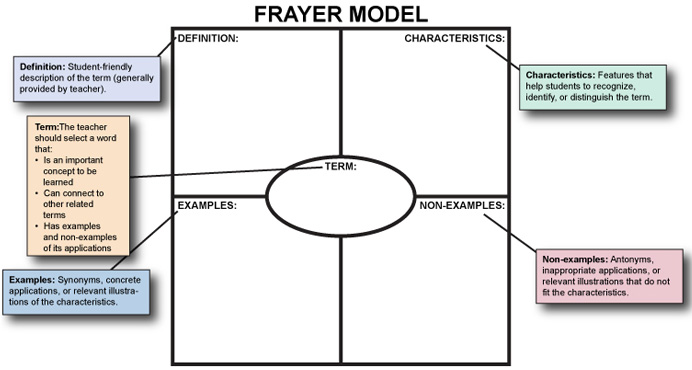
Frayer Model

     I found the Frayer Model to be a valuable graphic organizer for students to build vocabulary and conceptual knowledge. It allows teachers to incorporate the four elements for effective vocabulary instruction in one organizer. I think that having the “non-examples” section in this graphic organizer is extremely helpful for students because it debunks any assumptions that students may have about the vocabulary word. It visually shows students the definition of the word, characteristics of the word, examples, and non-examples. Like all graphic organizers, teachers need to model how to use it and explain the importance of it. Over time, students may work in groups to complete the organizer and gain a deeper understanding of the terms by discussing how they came up with examples or non-examples.


I specifically liked this math example:
http://iris.peabody.vanderbilt.edu/module/sec-rdng/cresource/q2/p07/sec_rdng_07_link_frayer_types_02/#content

QAR
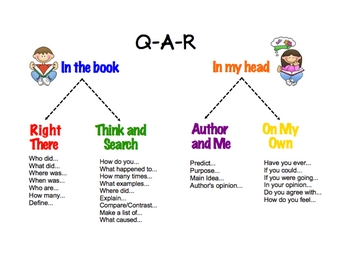
As a first grade teacher, this is the first time I have learned about QAR. I have heard about it because teachers in my district frequently use this strategy. However, I never understood exactly what the benefits were. After reading the article, “Using Collaboration, Co-Teaching, and Question Answer Relationships to Enhance Content Area Literacy,” I was amazed. “The QAR strategy can enhance comprehension across a variety of content areas and can encourage the use of a common language for strategy use throughout the school day” (Fenty, McDuffie-Landrum & Fisher, 2012). This strategy teaches students that there are two ways to find the answers to comprehension questions. The answers are either “in the book” or “in my head.” The answers to these questions are further broken down into “right there” or “think and search” for “in the book” answers. “In my head” is further broken down into “author and me” or “on my own.”  I love this idea because not all answers will be found directly in the text and this is a great strategy to get students to think about their own answers. Furthermore, this strategy is helpful to all students including students with learning disabilities.


References


Fenty, N., McDuffie-Landrum, K. and Fisher, G. (2012). Using collaboration, co-teaching, and question answer relationships to enhance content area literacy. Teaching Exceptional Children, 44(6), pp.28-37. 


Iris.peabody.vanderbilt.edu, (2016). IRIS | Seconday Reading Instruction (Part 1): Teaching Vocabulary and Comprehension in the Content Areas. [online] Available at: http://iris.peabody.vanderbilt.edu/module/sec-rdng/cresource/#content [Accessed 15 Feb. 2016].


Saturday, January 23, 2016

Literacy Autobiography


Literacy Autobiography


My Earliest Memories

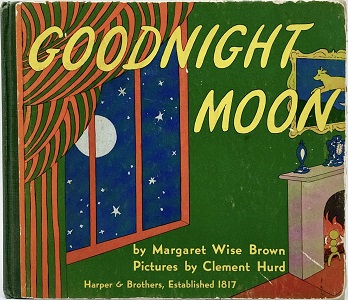
                My earliest memories of my literacy journey began when my parents read to me every night before I went to sleep. I remember sitting on my bed listening to my mom or dad read Goodnight Moon by Margaret Wise Brown and illustrated by Clement Hurd. It was my favorite bed time story and I enjoyed saying “Goodnight” to all of the things in the book. It made me feel like I was also reading along with my parents as I said “Goodnight.” When I reached the age of four, I started to pretend to read Goodnight Moon to my sister along with other books.


                Growing up, I admired my cousin Paul and I wanted to do everything he did. I remember sitting at our grandparents’ kitchen table when I heard Paul read for the first time when he was in the First grade. I was in Kindergarten and I was mesmerized because he was reading by himself. At that moment, I became determined to read on my own because I thought it was amazing.

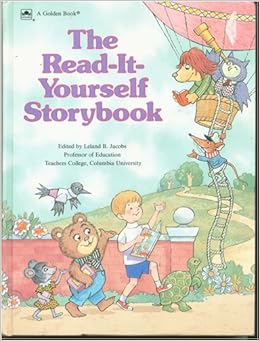
                I was five years old when my grandparents gave me the book, The Read-It-Yourself Storybook for my birthday. It contained seven short stories and I would bring this book everywhere. When I played school with my sister, I would try and read it to her until she became bored and said she didn’t want to play anymore. Then I would move on and sit in front of my stuffed animals and “read” to them. I understand that I was not truly reading the exact words on the page because when my parents would read one of the stories to me it would not sound the same. I would get frustrated and try to read the exact words to my sister and stuffed animals again. I now know I was only pretend reading, but this began my literacy journey to finally begin reading on my own.


                My earliest memory of actual “reading” was the day I was at my grandparents’ house after school and I told Paul that I could read. He replied that I was too young to read and I had to prove him wrong to be considered his “cool little cousin.” To prove to him that I could read, I took out my favorite book, The Read- It- Yourself Storybook, and opened it to the first story which was “The Monkey and the Bee.” I began to say the words on the page and I remember Paul screaming for my grandparents telling them that I was reading. I continued and finished the first story in the book and felt so proud of myself. When my parents came home from work, I read the story to them as well and they told me how proud they were of me. It was such a great feeling and it made me want to read more new stories.

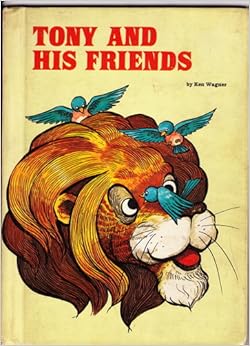
                When my Kindergarten teacher found out that I could read she made me feel very proud of myself by setting up a read aloud to the First Graders. I sat in the First Grade teacher’s big chair as my cousin Paul and his classmates sat on the floor staring at me. I was very nervous to read in front of the “big kids” but managed to read “Tony and his Friends” to them. This was another positive literacy experience that helped me to enjoy reading and continue on my journey.


Middle School

                My favorite memory was going to Barnes and Noble with my father. I remember getting excited to get a new book by Nancy Drew. She was my favorite author! I would finish reading these books as fast as I could so I could go back to the store with my dad to buy another one.  


It wasn’t until six years later when I was in the sixth grade when I connected to a book. I read the book, A Wrinkle In Time by Madeleine L’ Engle, which made an impact on my literacy journey. This is the first book that I remember reading that I was able to understand. I completed a book report on this book which consisted of a summary and a project. I loved this book and it helped me to realize that I wanted to teach reading. My teacher made reading this book very enjoyable and I realized I wanted to be like her and make reading fun.


High School and College

                Surprisingly, I don’t remember any significant literacy experiences after sixth grade through high school. I remember my High School literacy classes consisting of a lot of reading and writing that I didn’t enjoy or connect to. I had to write a lot of summaries on chapters of books that I do not remember. It was not until college when I became an English major that I connected to literacy and writing again. I truly enjoyed my reading and writing classes and learned a lot.


Currently

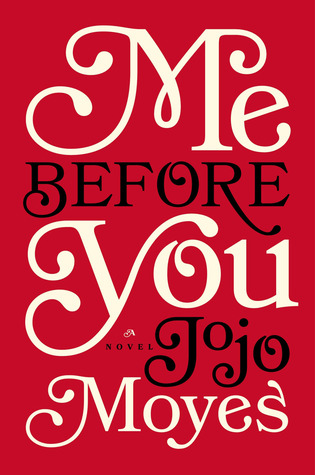
                Currently, I still continue to read for enjoyment and for information to help me become a better educator. My favorite author now is JoJo Moyes and my favorite book that I have read by her is Me before You. Reading is extremely important in my life and I want to continue to improve by learning as much information as possible to use it in my teaching career.


                Reading has always been an enjoyable experience and I try to emulate the same experiences in my classroom. I read books to my students the same way my parents read to me. I tell them I am proud of them to give them confidence when they do something positive. I try to be a role model for my students to look up to and I try to instill the love I have for reading in them. Literacy development is an ongoing process. As I read more, my ideas continue to change based on my experiences.